
Clear aligners have exploded in popularity over the past decade, and with that growth comes a flood of misinformation. Social media promises, late-night commercials, and well-meaning advice from friends can muddy the water fast. So we’re setting the record straight on the facts, and fiction, of Invisalign, from how it actually works to who it really fits.
Our board-certified orthodontists at Serrano Orthodontics have guided thousands of patients across Phoenix and Chandler through their clear aligner smile plan. Here’s what we want you to know before you make a decision.
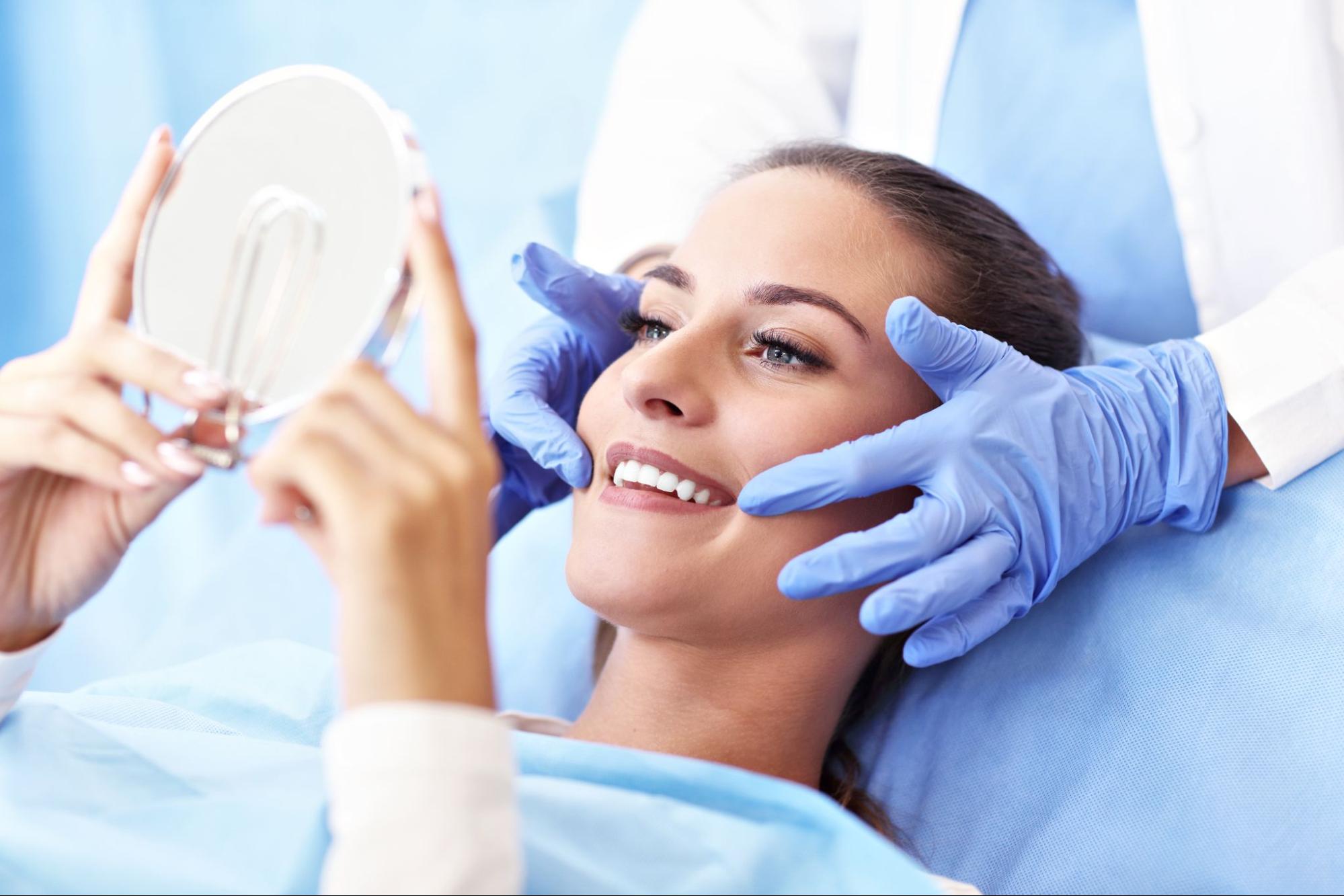
What Is Invisalign? Separating Fact from Fiction
Invisalign is a system of custom-made clear aligners crafted from a patented SmartTrack thermoplastic material, designed to gradually straighten teeth under the direction of a trained orthodontist. It is FDA-cleared, backed by over two decades of clinical research, and used by board-certified orthodontists worldwide to correct a wide range of alignment and bite concerns.
One of the most common myths? That Invisalign is only “cosmetic” or a lightweight option for people with minor issues. That’s not accurate. Today’s Invisalign technology can address crowding, spacing, overbites, underbites, crossbites, and more, when prescribed and monitored by a qualified smile doctor.
Another misconception confuses Invisalign with the direct-to-consumer aligners you order online. Those products skip the in-person exam, the diagnostic imaging, and the ongoing supervision that make real orthodontic care safe and effective.
Every Invisalign case at our practice is doctor-directed from day one. Dr. Paul Serrano and Dr. Andrew Serrano personally evaluate each patient, plan the tooth movements, and adjust treatment as your smile evolves. That’s a world away from mailing impressions to a lab and hoping for the best.
How Invisalign Actually Works
Invisalign uses a series of custom clear aligners, each slightly different from the last, to move your teeth in small, planned increments. You wear each tray 20 to 22 hours per day and swap to the next set every one to two weeks, with periodic check-ins at our office to track progress.
Here’s what the process looks like step by step:
- Digital 3D scan. We use an intraoral scanner to capture a precise map of your teeth, no goopy impressions required.
- Custom smile plan. Your orthodontist designs the exact tooth movements, previewed in 3D so you can see your projected final smile before you begin.
- Aligner fabrication. Your trays are manufactured from SmartTrack material, engineered to apply gentle, continuous pressure.
- Attachments placed. Small tooth-colored bumps are bonded to certain teeth. These give the aligners something to grip for more complex movements like rotations.
- IPR when needed. Interproximal reduction (a tiny polishing between select teeth) can create space without extractions in many cases.
- Progress checks every 8-12 weeks. We make sure teeth are tracking as planned and adjust if needed.
- Refinement aligners. Many patients receive a short second series of trays to fine-tune the final result.
Here’s the honest truth that no commercial will tell you: compliance is the single biggest factor in Invisalign success. Aligners only work when they’re in your mouth. If you take them out for long stretches, treatment slows down and results suffer. That’s not a flaw, it’s just physics.
The Real Benefits of Invisalign
Clear aligners offer real, measurable advantages over traditional options when prescribed by a qualified board-certified orthodontist. These benefits come from both the material science and the flexibility of removable trays.
- Nearly invisible appearance. The trays are thin and clear, which makes them a good fit for working professionals, teachers, and anyone who’d rather not announce their smile upgrade to every coworker.
- Removable for meals and hygiene. You brush and floss normally. No threading floss around brackets, no food trapped in wires. Many patients find it easier to keep their teeth clean with aligners than with fixed braces.
- Fewer emergencies. No poking wires, no loose brackets, no last-minute office visits because something snapped during dinner.
- Gentler forces. SmartTrack material delivers steady, lower-level pressure, which many patients describe as more comfortable than the periodic tightening of braces.
- Digital preview. Before you commit, you’ll see a 3D simulation of where your smile is headed. That kind of transparency used to be science fiction.
- Reliable results for the right cases. For mild-to-moderate cases, Invisalign can deliver excellent outcomes when managed by an experienced orthodontist.
What does that look like in real life? Patients across the Valley of the Sun often tell us they forgot they were even in treatment. One week into aligners, they’re giving presentations, going on dates, and smiling in family photos without a second thought.
That said, benefits only materialize when the treatment is right for the case. Which brings us to the comparison most people want to see.

Invisalign vs. Braces vs. Direct-to-Consumer Aligners
Not all tooth-straightening options are created equal, and lumping them together is where a lot of myths start. Here’s how the three main paths actually stack up.
| Factor | Invisalign | Metal Braces | Direct-to-Consumer Aligners |
|---|---|---|---|
| Visibility | Nearly invisible | Highly visible (metal) or less visible (clear) | Nearly invisible |
| Removability | Yes, for eating/hygiene | No, bonded to teeth | Yes |
| Doctor supervision | In-person, ongoing | In-person, ongoing | Minimal or remote only |
| Diagnostic imaging | Full exam, X-rays, 3D scan | Full exam, X-rays, 3D scan | Usually none |
| Complex cases | Mild to moderate (and some complex with attachments) | All ranges, including severe | Limited, mild only |
| Typical duration | 12-18 months | 12-24 months | 4-6 months (claimed) |
Invisalign works well for patients who want discretion and flexibility and whose cases fall within mild to moderate complexity (though attachments and refinements expand the range significantly).
Metal braces remain the gold standard for complex rotations, significant bite corrections, and cases involving skeletal issues. Our board-certified orthodontists still recommend braces when the diagnosis calls for it, because the right tool matters more than the trendy one.
Direct-to-consumer aligners are where we get concerned. Skipping the in-person exam means no X-rays to spot hidden root issues, no periodontal evaluation, and no one physically checking that teeth are actually moving as planned. The American Association of Orthodontists has cautioned patients against treatment that skips in-person supervision. Only a licensed orthodontist can diagnose underlying bite or gum health issues before straightening begins, and that diagnostic step is non-negotiable for safe treatment.
Serrano Orthodontics is proud to be a doctor-led alternative to the online-only model. Every patient gets a real exam, real imaging, and real follow-up from a smile doctor who knows their name.
Who Is (and Isn’t) a Good Invisalign Candidate
Invisalign works well for a wide range of patients, but it’s not a universal solution. Here’s a realistic look at who tends to be a strong candidate and who may need a different approach.
Strong Invisalign candidates typically include:
- Adults and teens with mild-to-moderate crowding or spacing
- Patients with minor bite issues (small overbites, underbites, or crossbites)
- Former braces patients experiencing minor relapse
- Teens who have shown they can be responsible with wear time
- Professionals who need a discreet option
On the other hand, some patients get better outcomes with braces, especially when the case involves skeletal factors or heavy rotations that aligners handle less predictably. Honest guidance here saves you time and frustration down the road.
Patients who may be better served by braces:
- Those with severe skeletal bite discrepancies
- Cases involving large tooth rotations that aligners can’t fully address
- Patients with significantly impacted teeth
- Anyone unwilling to commit to 20-22 hours of daily wear
That last point matters. Invisalign only works if you wear it. If removing trays all day feels like something you’d routinely do, braces might actually give you a better outcome, since they’re working whether you think about them or not.
The honest answer about candidacy is this: only an in-person orthodontic exam can tell you for sure. Online quizzes and app-based assessments can’t see what X-rays reveal, and they can’t physically evaluate your bite. When you come in for a free consult, our board-certified orthodontists give you a real answer based on real diagnostics, not a sales pitch.
Invisalign Myths: Frequently Asked Questions
Does Invisalign hurt?
Invisalign involves mild pressure, not sharp discomfort. Most patients feel some tightness or soreness for two to three days after switching to a new aligner, especially during the first few sets. The sensation fades quickly, and over-the-counter options are rarely needed beyond those first days.
Is Invisalign as effective as braces?
For appropriate cases, yes. For mild-to-moderate alignment and bite concerns managed by an experienced orthodontist, Invisalign can deliver results that rival braces. For severe skeletal issues or complex rotations, braces may still be the better tool. The key is accurate diagnosis, which is why in-person evaluation matters.
Can I eat with my aligners in?
No. You should remove your aligners for all meals and for any beverage other than cool water. Eating with trays in can damage them, trap food particles, and lead to decay. Coffee, tea, soda, and juice will also stain the aligners. Pop them out, enjoy your meal, brush if possible, and put them back in.
Will I need a retainer after Invisalign?
Yes. Teeth naturally want to shift throughout your life, and retainers are the only way to lock in your results long-term. Expect to wear a retainer full-time for a short period after treatment, then transition to nighttime wear indefinitely. Think of retention as the final (and permanent) step of any orthodontic treatment, aligners or braces.
Does Invisalign affect speech?
Many patients notice a slight lisp during the first few days of wearing aligners. Your tongue is adjusting to the new surface against the back of your teeth. The lisp almost always resolves within a week as you adapt, and talking more actually speeds up the adjustment.
Can Invisalign fix severe bite problems?
Sometimes, but not always. With the help of attachments, elastics, and careful treatment planning, Invisalign can address a wider range of bite issues than it could a decade ago. However, truly severe skeletal discrepancies or cases requiring major jaw repositioning may still call for braces or a combined orthodontic/surgical approach. A thorough exam is the only way to know what your case needs.
Myths spread fast, but your smile deserves facts. If you’re weighing clear aligners against other options, the smartest next step is a conversation with a board-certified orthodontist who can look at your actual teeth and give you an honest answer.
Our Phoenix office at 1515 E. Missouri Ave. and our Chandler office at 800 W Chandler Blvd. both offer free consults with Dr. Paul Serrano and Dr. Andrew Serrano. Call our Phoenix location at (602) 274-7840 or our Chandler location at (480) 899-1633, or schedule online whenever it’s convenient. Smiles run in the family here, and we’d love to help you start the smile of your dreams today.